Rodent activity throughout Los Angeles County stems largely from the dense interface between native urban scrub and Mediterranean-style architectural vulnerabilities. In hillside neighborhoods like Silver Lake, Los…
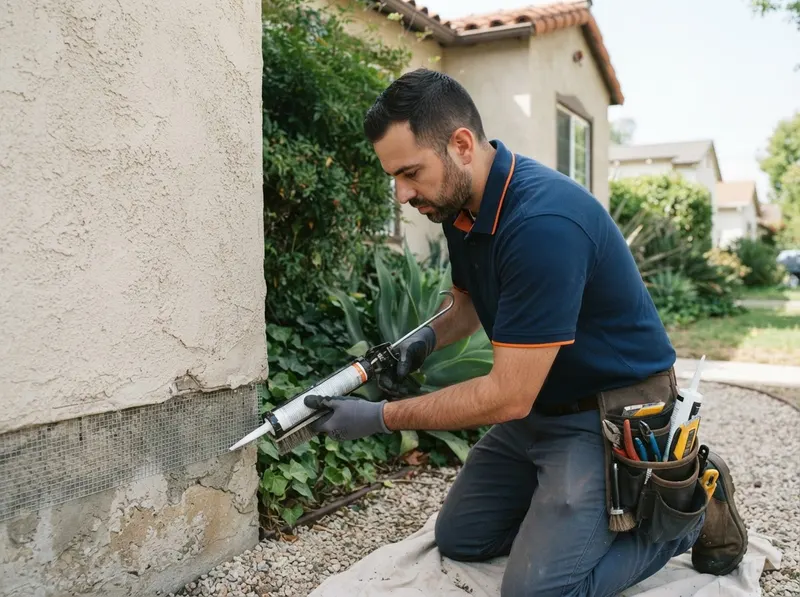
Rodent activity throughout Los Angeles County stems largely from the dense interface between native urban scrub and Mediterranean-style architectural vulnerabilities. In hillside neighborhoods like Silver Lake, Los Feliz, and Highland Park, citrus groves and mature palm canopies provide roof rats with elevated access routes directly onto Spanish barrel tile roofs. When gaps beneath ridge tiles, eave returns, or decorative stucco ledges exceed 0.25 inches, rodents infiltrate attic voids. Flat-roof Mid-Century and Spanish Colonial foundations common to Brentwood and Sherman Oaks regularly feature raised foundation crawlspaces where deteriorated subfloor screens and unsealed utility chases along copper plumbing pipes offer uninterrupted subterranean access for Norway rats. Standard chemical bait boxes placed on exterior perimeters fail to resolve structural intrusions because they do not address these physical openings. Structural exclusion alters the building envelope permanently, complying with vector standards set by the California Department of Public Health and structural guidelines maintained by the California Structural Pest Control Board.
Effective defense requires an engineered progression rather than chemical masking. Step 1: Technicians execute a 360-degree envelope survey, charting foundation lines, crawlspace hatches, dryer exhaust housings, and parapet walls. Step 2: Critical mechanical barriers are installed using 18-gauge, 0.25-inch galvanized hardware cloth, copper mesh, and fiber-reinforced elastomeric sealants that resist rodent gnawing pressures exceeding 7,000 pounds per square inch, aligned with materials criteria from the American Society for Testing and Materials. Step 3: Interior population abatement begins simultaneously using enclosed mechanical snap stations placed along established sebum trail paths, strictly avoiding interior poison baits that lead to secondary decay within drywalled cavities. This targeted intervention mirrors the clinical safety principles published by the EPA Integrated Pest Management Guidelines and rodent control recommendations established by the Centers for Disease Control and Prevention.
Property owners evaluating containment must recognize the functional trade-offs between routine monthly rodent bait programs and comprehensive structural exclusion. Routine baiting carries an ongoing recurring maintenance cost while leaving structural entry points fully unsealed, meaning external rodent migrations from adjoining alleys in Koreatown or dry canyon washes in Woodland Hills will continuously replace eradicated populations. Structural exclusion requires an initial engineering investment in physical repairs, eliminating chronic ingress without releasing active anticoagulants that endanger local raptors, in accordance with the wildlife protection directives documented by the California Department of Fish and Wildlife. For properties bordering the coastal breezes of Venice or the canal corridors where marine humidity accelerates iron decay, non-rusting stainless steel hardware is deployed pursuant to the manufacturing requirements of the International Association of Certified Home Inspectors. Remediation practices align with sanitation protocols established by the National Pest Management Association, safety directives from the Occupational Safety and Health Administration, and residential safety standards monitored by the Consumer Product Safety Commission. Direct diagnostic appointments can be arranged by contacting ApexShield Pest Control at (424) 540-2742.
Every job gets a firm, written price after a free on-site visit.
For standards, safe disposal, and service guidance on pest control services in Los Angeles, CA, useful references include U.S. EPA, ENERGY STAR, U.S. Dept. of Energy, Consumer.gov, U.S. Census Bureau, and Google Maps. General consumer and small-business resources are available from USA.gov, Better Business Bureau, FTC Consumer Advice, U.S. Small Business Administration, and Ready.gov.
Tell us about your rodent exclusion and abatement job in Los Angeles and we'll send a clear, written quote, usually the same day.
 ApexShield Pest Control